Blog
WHY WIDOWS NEED HELP
The heartbreaking plight of India’s widows long back:
India’s widows are often ostracized from society after the death of their husbands.
Women are kicked out of their homes and shunned by society after their
husbands die.
Around five per cent of Indian women are said to be widows, and more than half
of them have no source of income.
Elderly women face living on their own or in decrepit ghetto areas, and are
prevented from participating in village festivals, family gatherings, and other
important communal events.
They are not normally allowed to go out to the markets, not allowed to fetch
water from the rivers or public wells, and are banned from participating in
celebrations/marriages of family or village.
Widows are often considered to be cursed, meaning they are thrown out by their
families for fear of spreading their bad luck. Also in India widows are treated as
untouchables.
Losing a husband in India forces many women into a life of begging and
destitution. Ostracized by society, thousands of India’s widows flock to the towns
and cities of India, begging, involving in prostitution, robbery, cheating to feed
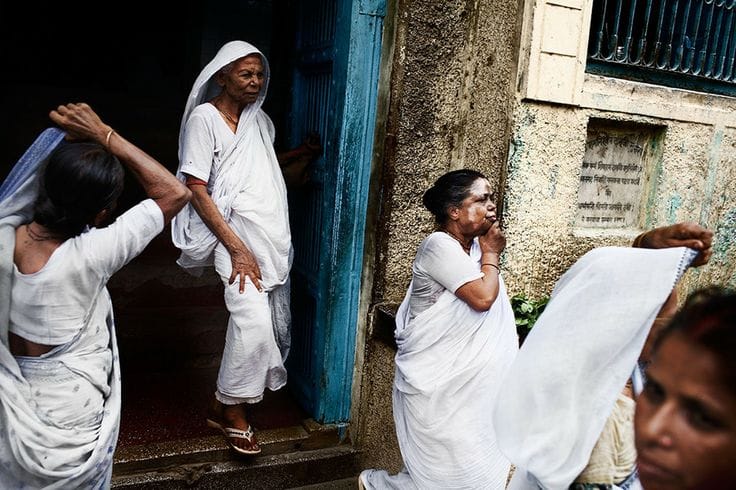
their empty stomachs. Even we can find very old aged widows on side of the
streets, hunched over with walking canes, their heads shaved and their pain
etched by hundreds of deep wrinkles in their faces.
These widows, the poorest of the poor, are shunned from society when their
husbands die, not for religious reasons, but because of tradition, and because
they’re seen as a financial drain on their families.
They cannot remarry. They must not wear jewelry. They are forced to shave their
heads and typically wear white. Even their shadows are considered bad luck. Most
of the Indian Widows, after her husband dies, all their belongings, and properties
were snatched off by their grown children, later Kicked off from homes.
Grieving is hard enough but in India many widows also have to contend with rape,
prostitution, forced marriage, property theft, eviction, social isolation, murder
and physical and mental abuse. Unfortunately there is a stigma attached to
becoming a widow in India. In addition, the loss of their husband means they have
little to no income to support their children and family members. Some mothers
can’t afford to send their children to school while some kids end up working on
the streets or in factories where the conditions are poor. This is no life for a child.
The widows believe what has always been said about them, that they have bad
karma (fate) and their life is worthless without a husband. Upon their husband’s
death, wives lose all human rights and dignity and are shunned by society. In fact,
until the last century, widows were forced to, or would willingly throw themselves
upon their husband’s funeral pyre (called as sati). In the rural areas of India, which
is the majority of the country, widows are immediately disinherited and thrown
out of their homes by their husband´s families. They are totally penniless, forced
to beg on the side of the road, or forced to work for hours each day in
temples/offices in order to receive one meager meal per day.

Most widows feel that all they have to look forward to is the moment of death, and they are forever
contemplating suicide. There are many young widows who hide and some plan
their suicides, as other members of the family starts molesting them for sex.
Sometimes they are convinced by their own parents that they have not earned a
better life. Their own society has made them outcasts and has stripped them of
their basic dignity as human beings.
In India women are born to suffer till their death. The sufferings of women are
doubled if they happen to be widows in the Indian soil. A woman is surrounded by
the culture that seldom can come out from this. Though social change is very fast
due to the growing globalization , still few areas remain unchanged and some of
the areas where the change is very slow is the re marriage of young widows ,
seeing them as bad luck, treating them as untouchables, and other related
customs.
Society is not positive even today for widow remarriage. Setting apart the laws
societal norms are strong here that a widow has to die as a widow whatever her
age and surroundings be. The widows in India are one of the categories of women
who are not given importance by their own/other people.
In India, widows are looked down upon as disgraceful, unlucky, and even cursed.
When a couple marries, the woman leaves her family and lives with her husbands’
family. Once the husband dies, relatives take away all of the property, sell it and
divide the profits. They often leave the wife and the children with nothing. They
are left on their own, living sad lives of destitution and poverty. Because of this
many widows turn to street begging or prostitution to support their families. Even
then, widows are not allowed to attend their own children’s weddings because
they are so despised in society.
India is often projected as a harmonious, multi-cultural society to the external
world, but the down side of this complex society is that discrimination and
prejudice is a way of life. Discrimination against women unfortunately starts at
home from a very young age. On the one hand the girl child is pampered. On the
other hand girls are discouraged to go to school and to get educated. Instead in
the interest of making her a good wife, they are trained at home to do the
domestic work. Since in its ignorance the society thinks, “that is the appropriate
place for women”. Sometimes the birth of a girl is considered a curse. Child
marriages are still very common in Indian villages thus girls get married at a very
tender age. So at a very young age they are burdened with a lot of
responsibilities, becoming mothers that leads to physical weakness, illness, and
diseases.
Widows in India have a pronoun problem. The estimated 40 million women
widows in the country go from being called “she” to “it” when they lose their
husbands. They become “de-sexed” creatures.
Clearly, it’s more than a problem of language, although that discrimination goes
further, with epithets such as “husband eater” used against them. Widows are
still accused of being responsible for their husband’s death, and they are expected
to have a spiritual life with many restrictions which affects them both physically
and psychologically.
Although widows today are not forced to die in ritual sati (burning themselves on
their husband’s funeral pyre), they are still generally expected to mourn until the
end of their lives. Whether young or old, widowed women leave behind their
colorful saris, part with their jewelry, and even shave their heads,
In much of Indian society—across caste and religion—a widow is often perceived
by family members to be a burden and sexually threatening toward marriages.
I don’t want to prolong, although there is so much more to tell about the widows
of India. Just in short, Indian widows are treated as slaves, beggars, dolls of
prostitution, signature of bad luck, and more than all of this she is very burden for
family to take care.
PRESENT SCINARIO:
In the current scenario, the practice of widowhood and its associated rituals are not as openly prevalent in India as they once were. However, the remnants of these practices still linger in the mindset of many Indian people. Despite not being as widespread as in the past, the influence of such traditions is observed daily across various regions of the country, albeit more subtly.
This persistent undercurrent of discrimination and outdated customs underscores the need for a thorough eradication from the nation’s social fabric. It is essential to address and eliminate these deep-rooted prejudices to foster a more inclusive and equitable society. The challenge lies in transforming societal attitudes and ensuring that these archaic practices are not just diminished in visibility, but completely removed from the collective consciousness of India.
CONCLUSION:
In conclusion, the plight of widows in India is a stark reminder of the profound social and economic challenges faced by millions of women in the country. Ostracized and marginalized following the loss of their husbands, these women endure extreme hardships, ranging from poverty and social isolation to severe human rights abuses. The deeply entrenched cultural norms and traditions that perpetuate their suffering call for urgent attention and action.
Efforts like those of LOVE AND COMPASSION MINISTRIES represent a beacon of hope in this grim scenario. By providing support, advocating for their rights, and striving to reintegrate them into society with respect and dignity, such initiatives not only offer immediate relief but also work towards long-term societal change. It is a call to action for communities, policymakers, and international organizations to join hands in addressing this issue, ensuring that these women receive the support and recognition they deserve. Only through sustained and collaborative efforts can we hope to alter the grim narrative of widows in India and help them lead lives of dignity, free from discrimination and despair.